
The Pulse of 60 km/h: Breathing Life into the City — AGT's Optimal Speed Balancing Efficiency and Kindness

Compared to traditional railways, the
top speed of 60 km/h (approx. 37
mph) for AGT might seem modest.
However, sitting in the front car as it
navigates the city reveals a sense of
speed and a crisp rhythm that numbers
alone cannot capture.
The average distance between stations
for Japanese AGT lines is roughly 890
meters. After leaving a station, the
vehicle accelerates to its top speed
only to begin decelerating almost
immediately for the next stop, letting
passengers feel a gentle, rhythmic
pull of gravity. This nimble repetition of
"full acceleration and immediate
deceleration" is a light-footed step
that heavy railway cars simply cannot
replicate—it is the very pulse of the city.
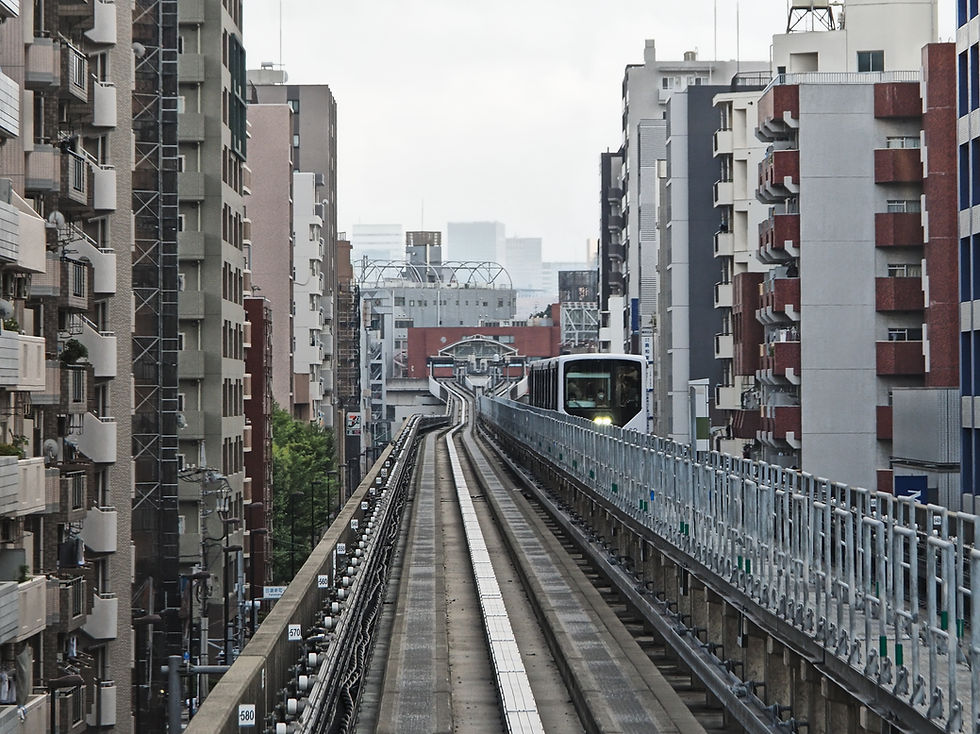
One might wonder: why not aim for
speeds beyond 60 km/h? This choice
is the result of pursuing the most
economical operation for a lightweight
system running through a city. The
acceleration force of a typical electric
train motor begins to decline around
40 km/h, while air resistance increases
in proportion to the square of the
speed. Within a short span of about
900 meters, balancing these physical
constraints with the "lightness of the
vehicle" naturally leads to the
"Golden Balance" of 60 km/h.
Rather than chasing high speeds and
pushing stations further apart, AGT
chooses to maintain moderate speeds
and place stations frequently,
preserving a rhythm that makes travel
easy for everyone. A gentle speed of
60 km/h is a sincere choice that allows
passengers to enjoy the city's scenery
and stay in sync with the rhythm of
daily life.
I hope you look forward to the next
AGT Blog!