
Why Do Seat Arrangements Differ Across the Same Automated Transit System? — Evolution of Seating Configurations Reflecting Local Lifestyles

When riding and comparing AGT
(Automated Guideway Transit) systems
across Japan—such as Yurikamome,
Port Liner, and Seaside Line—you will
notice that seating arrangements vary
significantly from line to line. These
distinct "seating configurations" clearly
reflect the local challenges faced by
each line and changes in passenger
lifestyles.
On first-generation AGTs, maximizing
passenger capacity within compact
car bodies was the top priority, making
longitudinal seat arrangements—which
provide ample standing space—the
mainstream. (Exceptions included box
seats on the Leo Liner and early
Yurikamome, as well as semi
-transverse seating on the Nippori
-Toneri Liner.) However, as cities
developed, passenger needs
diversified across lines, making uniform
seating configurations insufficient to
meet demand.
With the introduction of new second
-generation vehicles, each transit line
began adopting customized seat
arrangements tailored to its specific
community characteristics:
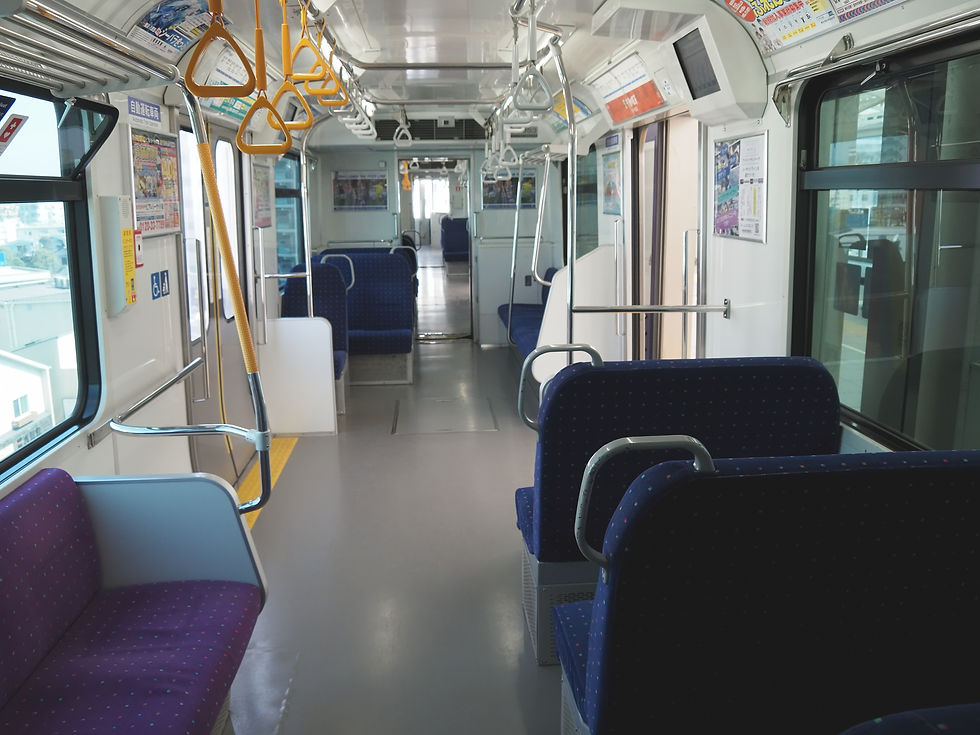
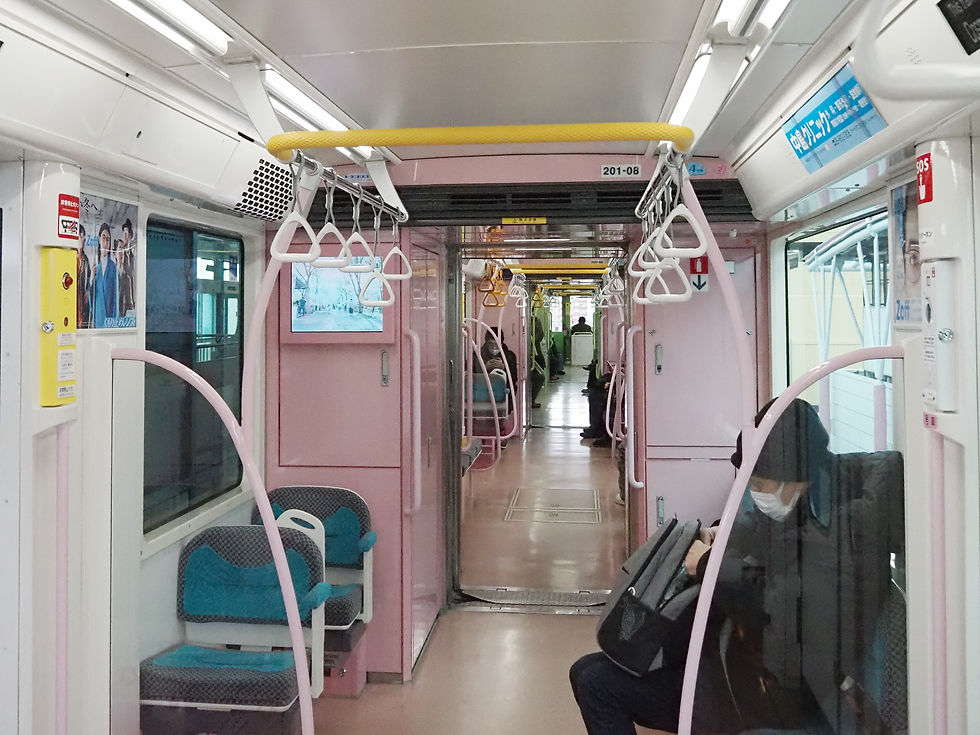
Kanazawa Seaside Line & Newtram: To meet demand for
seated travel, half of the longitudinal seats were replaced with two-person and one-person transverse seats, respectively.
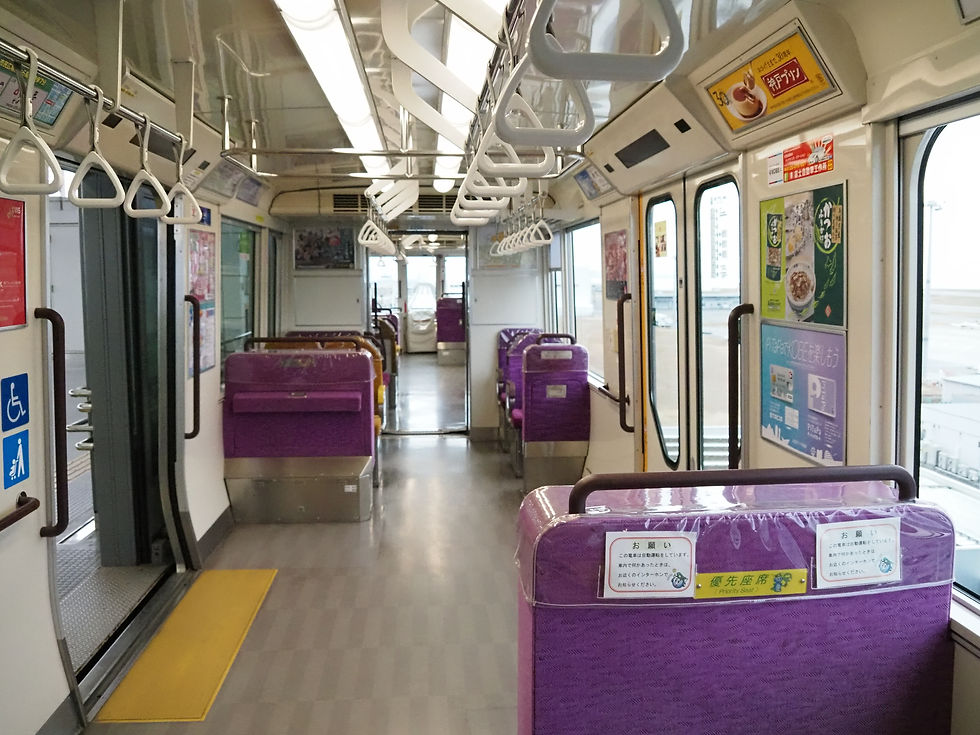
Port Liner: In conjunction with its extension to Kobe Airport in 2006, standing areas around doors were expanded to better accommodate travelers with large suitcases.
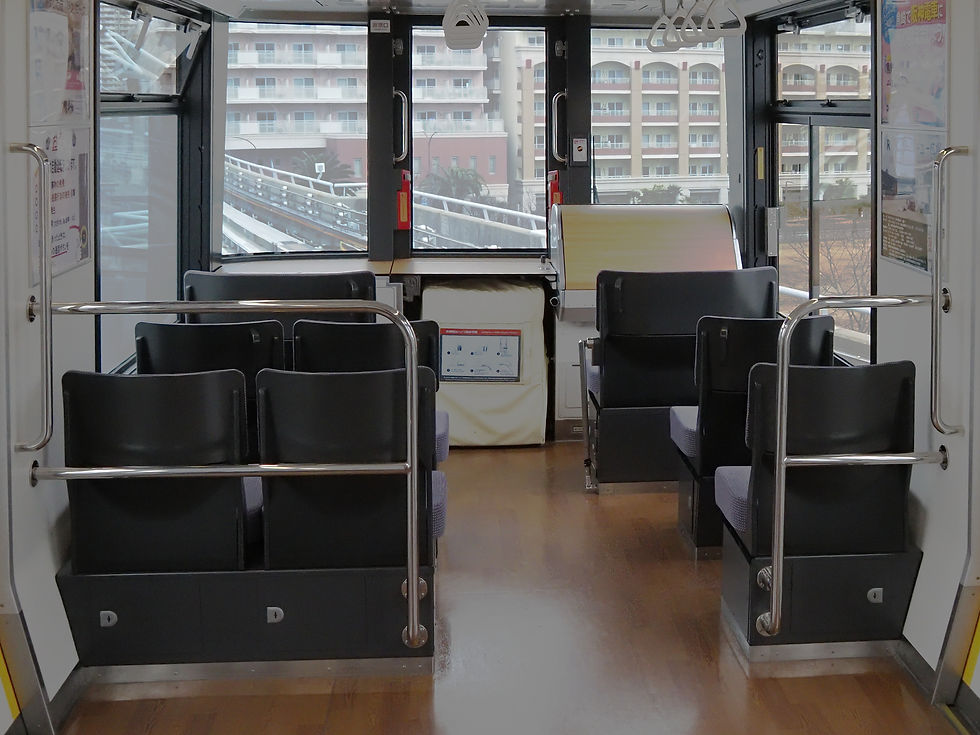
Rokko Liner: Three rows of transverse seats were installed at the front of the lead car to offer scenic forward views, while keeping longitudinal seats throughout the rest of the train to maintain peak commuting capacity.
Yurikamome: To handle intense overcrowding during large-scale events such as Comic Market at Tokyo Big Sight, original box seating was replaced with an all-longitudinal seat layout.

While some lines prioritize peak-hour
congestion relief, others emphasize
airport accessibility, scenic views for
tourists, or comfortable seated
experiences. Moving beyond merely
"transporting people" to flexibly
answering line-specific needs and
economic activities, the diversifying
seat arrangements of AGTs stand as
proof of how urban transit has evolved
to thoughtfully serve local
communities.
I hope you look forward to the next
AGT Blog!