
Why Yurikamome’s Unpainted Aluminum and Film Decals Create a Circular Urban Transit System
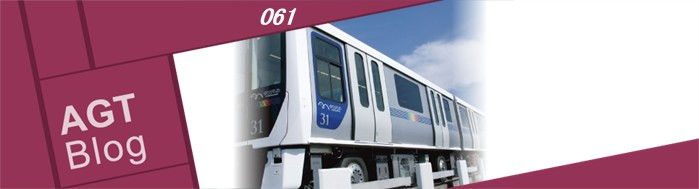
Trains adorned in beautiful corporate
colors—such as Keikyu's red, Hankyu's
maroon, and Meitetsu's red—possess
a striking presence on the tracks.
However, the bodies of
Yurikamome’s second-generation
train cars (7300 and 7500 series)
feature no paint whatsoever. Behind
their seemingly simple silver exterior
lies environmental technology
designed with future recycling and
disposal in mind.

Unpainted aluminum alloy car bodies
feature a "hairline finish" that forms a
protective oxide layer on the surface,
safeguarding the structure from rust
without relying on paint. Furthermore,
instead of paint, specialized film decals
are used for the signature rainbow
stripes, company logos, and train set
numbers.

The primary purpose of combining
unpainted aluminum with film decals is
to make recycling in electric arc
furnaces exceptionally easy when the
train reaches the end of its service life.
On conventional painted car bodies,
removing paint coatings for recycling
required immense energy, labor, and
cost. With film decals, however,
workers simply peel off the film during
dismantling, allowing high-purity
aluminum to be fed smoothly into
melting furnaces without incurring
paint-stripping costs or energy.
This foundational concept of a "silver
armor" paired with film decal
specifications established by
Yurikamome was subsequently
adopted by other AGT lines, including
the Nippori-Toneri Liner, New Shuttle,
and Leo Liner. Pursuing car body
recyclability supports resource
circulation and the formation of a
sustainable society across urban
transit systems.
I hope you look forward to the next
AGT Blog!